CASE — 02 · 2024 — 2025
Crime Radar AI
A public-safety platform that turns raw incident data into map-based risk insight for law enforcement and citizens.
- React
- Django
- TensorFlow
- Python
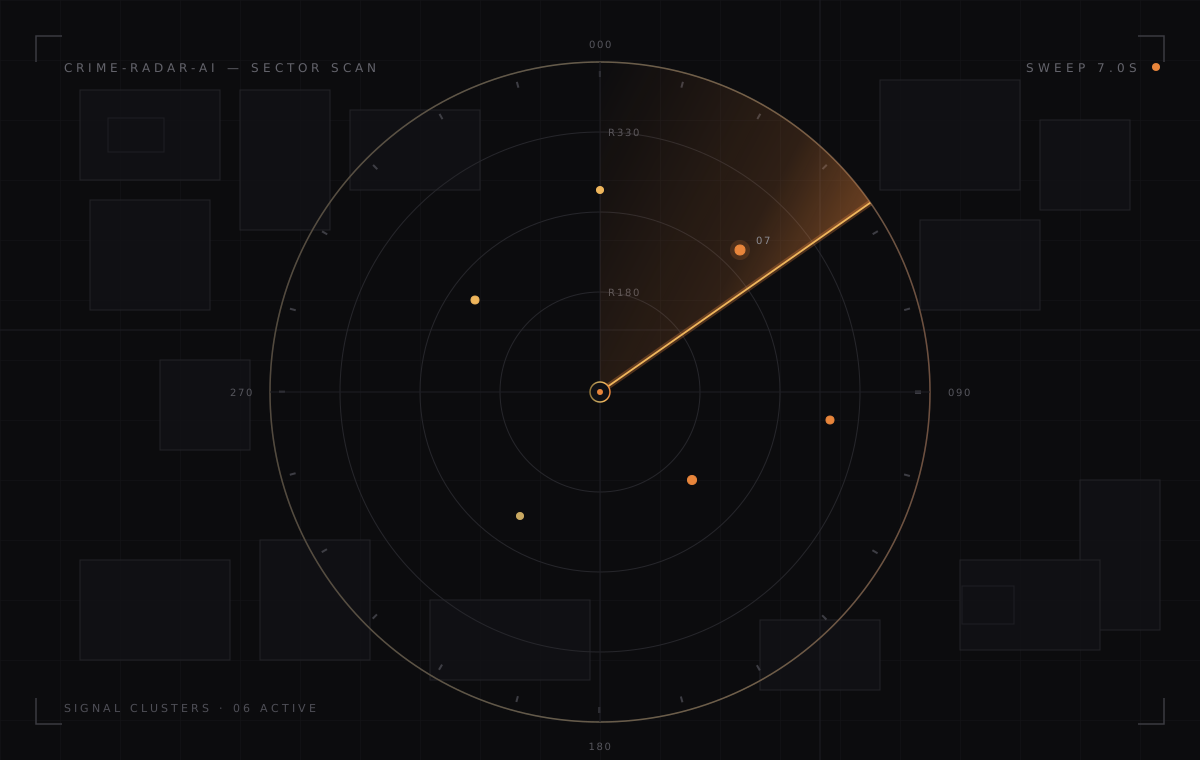
Crime data is public, but it isn't legible. Raw incident feeds don't tell a patrol unit where to focus or a resident which street to avoid at night — the information exists, the insight doesn't.
I built the platform end to end: a TensorFlow model that classifies and scores incident data, served through a Django REST API, with a React frontend that renders risk as an explorable map instead of a spreadsheet.
It works today as a decision-support tool with two distinct audiences — pattern-level insight for law enforcement allocation, street-level awareness for citizens. It's also the project that taught me the most about the distance between a trained model and a product people can act on.
OUTCOMES
- Incident-classification model serving a real product
- One map, two audiences: enforcement and citizens